Showing posts with label Cambria Matlow. Show all posts

Tuesday, November 30, 2010

Burning In the Sun Dives into the Gulf

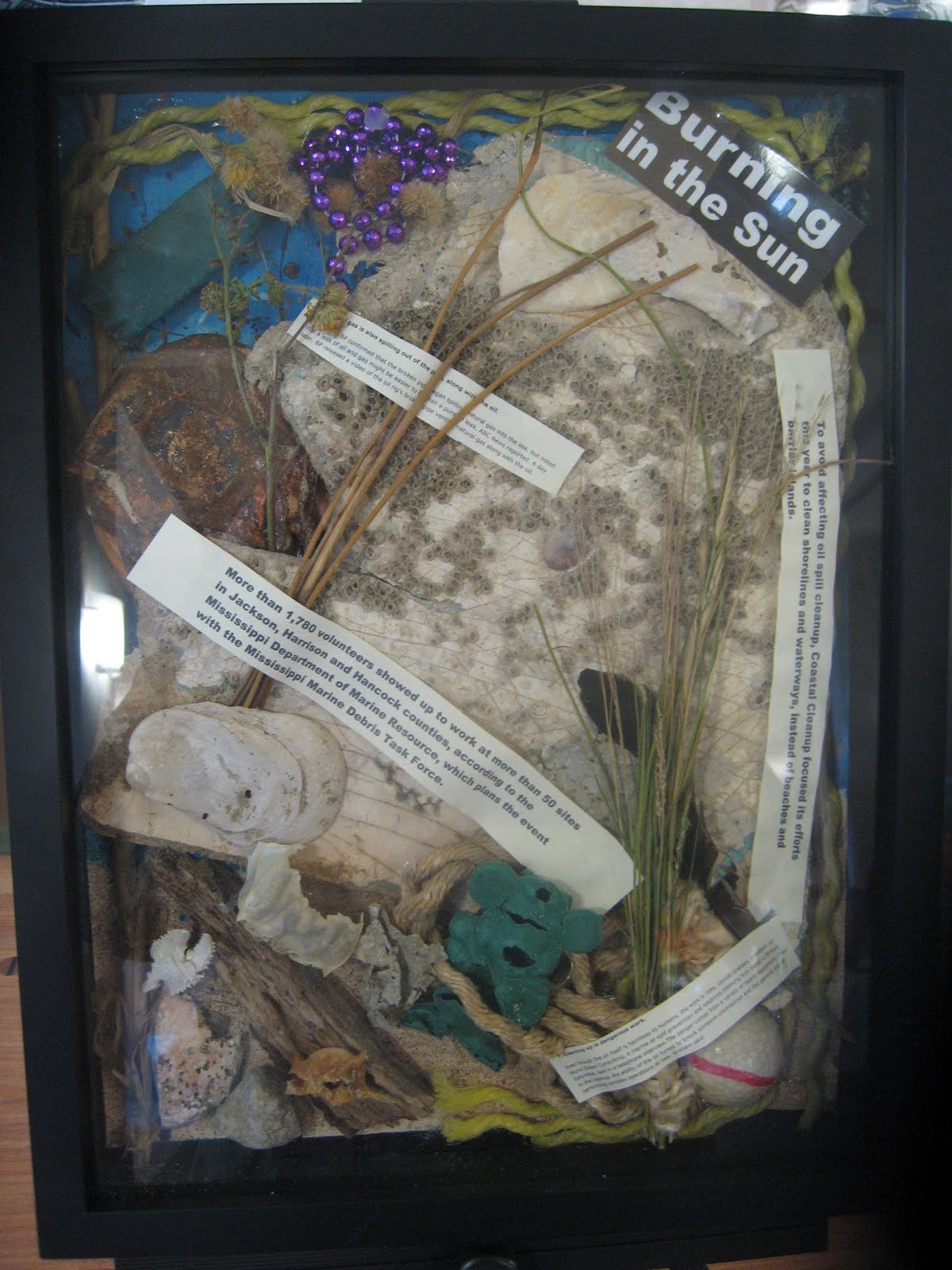
I drove down from Birmingham towards Ocean Springs, MS for the last leg of the tour. Ocean Springs was a quaint little town on the Gulf, and the 2nd oldest settlement in the U.S. after St. Petersburg, FL. I stayed at the Gulf Hills Hotel, which I mention because it was a regal establishment straight out of another era, and served as Elvis’ summer home from 1951-1957. The screening in Ocean Springs was at the Mary C O’Keefe Cultural Center, affectionately known as the ‘Mary C,’ and cosponsored by the Anderson Museum of Art. This museum was devoted entirely to acclaimed regional environmental artist Walter Anderson, whose murals adorned the theater inside the Mary C. The Mary C itself was a giant art deco-style schoolhouse building that had been restored into a multi-purpose arts center. Executive Director Eric Zala was my gracious host and told me about the conference the center had hosted earlier in the day about the BP Oil Spill. While the spill hadn’t hit Ocean Springs directly, it had certainly affected the larger community. Teams of kids had made art projects responding to the spill, and one of the projects on display in the Mary C lobby had been named ‘Burning In the Sun.’ I was honored and amazed that our film had entered into the discussion, if even subconsciously, surrounding such a major environmental issue.


Eric promised me that the crowd assembled to see the film was small, around 25 people, but enthusiastic, and he delivered. Afterward there was a reception with yummy African food, cooked that day by students from the Mary C’s ‘learning kitchen.’ Amazing! I really appreciated and enjoyed this. Several people mentioned to me that they had never seen solar energy used anywhere nearby.


Before scooting out of town the next day, Eric gave me a tour of the Mary C. Naming the town in Mississippi that had actually been Katrina’s epicenter, Eric offered up some controversial (in my mind) views on the intrastate politics of the Katrina cleanup and rebuilding effort, reminding me once again not to underestimate the power of regionalism and local perspectives when it comes to understanding any given political or cultural situation.


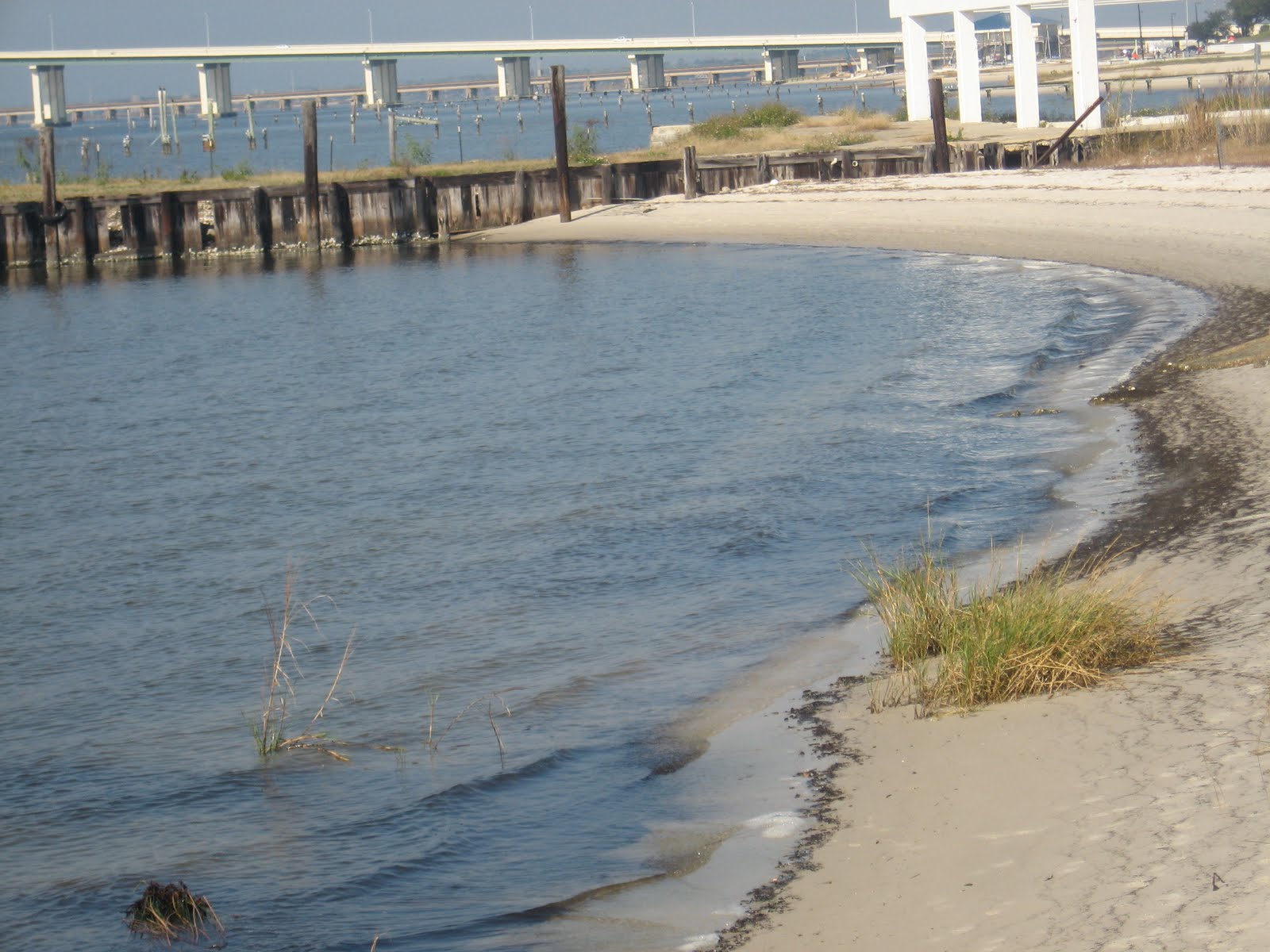
I also made a point to get down to the Gulf shore. I spent some time on a pier, watching the pelicans go by, breathing in the air. I was joined by a fisherman and a young boy. The father was teaching his son how to fish. Seemingly they had been out fishing together before, but this was the first time the father had offered any insight into the process, or that the son had been old enough to ask questions. I was reminded of one of my favorite movies, Alamar. The waters here in Ocean Springs hadn’t been contaminated by the oil spill, I was told, but this father-son duo really brought its impact home for me anyway.


I drove from Ocean Springs a quick 90 minutes on I-10 to New Orleans for my final stop on the tour. This was the only place on the tour I had been previously, so it’s unique hotstep was not such a shock.


I spent a couple hours at the Ogden Museum of Art, where my new friend Shawne Major’s work was hanging in the lobby. I loved seeing her intricate work in person, and also really enjoyed Clementine Hunter’s folk art paintings upstairs.


I headed over to Frenchmen Street, where that nights’ screening was to take place. Frenchmen Street blew my mind, as I had never been there before, and felt like I had finally stepped into the real New Orleans. This is where locals come to hang out and play.


At Café Rose Nicaud, an unsuspecting little café, I met Eileen Julian, director of the New Orlans Afrikan Film and Arts Festival and an African Studies Professor at Indiana University. About 25 people showed up to watch the film on the screen that was pulled down inside the café. However, outside, Eileen’s team had arranged for a dual projection scenario in which the film was simultaneously projected onto the side of a giant building across the bustling street! So not only was the café packed with audience members, but outside people were watching the giant projection too, both seated in front of the café, random passers-by, people lounging in front of clubs down the street – amazing! People would stop with their friends to watch 2,5, and 10-minute segments, others literally plopped down on the sidewalk to stay for the whole film! What a great idea this was. I commended Eileen and her partner Joe for this vision, as it really brought in a whole new audience and expanded the impact of the film and the experience of watching it. The sound outside was impressive too, as we were competing against the music emitting from jazz clubs down the street and also crowd noises from an Indian festival organized by Governor Bobby Jindal one street over. Just a typical New Orleans night…


We had a great Q & A, with a large number of filmmakers and activists in the audience. A couple of shorts had played before the feature, and one of those filmmakers joined me for questions as well. A few people in the room had moved to New Orleans after coming to town to help in the rebuilding effort after Katrina, and I felt overall the room connected with the film’s energy and focus on building and empowerment. One woman in particular, an activist in the Lower 9th Ward, was moved by what she saw and wanted to show the film to the community there, and by that I was very honored. I saw a lot of people feeling personally connected to the film, and for that reason I think the film could sustain a longer theatrical run in New Orleans. Thanks to Eileen, Joe, the projection team, and Melanie Grace for making this magical final screening happen.


Since it was my last night on the tour, and since I was in New Orleans, it seemed only appropriate to cap off the adventure with some jazz at Snug Harbor, some new friends, and revelry.

Monday, November 22, 2010

Cambria Matlow - Burning In Birmingham

I drove the whole way from Auburn to Birmingham along country roads and through the Talladega National Forest, and realized why the state has it’s moniker ‘Alabama the Beautiful.’ This is what roadtripping should always be like.


Birmingham too was surprisingly beautiful, surrounded by low hills full of red foliage on almost all sides. I had a full day in the city before my screening there, so took the opportunity to head to the Civil Rights Institute downtown. Across the street from the Institute in one direction was Kelly Ingram Park, a major staging ground for civil rights demonstrations in the 1960’s. This is where demonstrators were sprayed with water hoses and intimadated by police attack dogs, and where children were arrested for participating in civil rights demonstrations.


Across the street in another direction was the 16th Street Baptist Church, site of the bombing that, less than a month after the 1966 March on Washington, killed four young girls. Needless to say, the setting gave the Institute a whole lot of immediate resonance.


The exhibits also featured a ton of rarely-seen archival documentary footage, which as a filmmaker I appreciated greatly. I found it particularly interesting that, in response to the plain old racism and wrongness of local city and state officials from Birmingham and Alabama, civil rights activists time and time again would turn to the U.S. federal government for support. This would often come in the form of legal rulings from the Supreme Court, and sometimes protection from the National Guard, ordered by the President. There seemed to be a conscience in the national governement, and in the national courts, where there was none locally. Where is our government’s conscience now? It seems to have gone down the drain of politics. It’s sad. I know this predicament is nothing new, but this was a powerful reminder of the immediate difference a government with a soul can make.

I walked back toward the University of Alabama, Birmingham via downtown, and passed the Alabama Theatre. I love old theaters so I snapped a picture. It’s been designated the State Theater of Alabama, and seats something like 3500 people.


The screening took place at the Alys Robinson Stephens Center for Performing Arts, affiliated with the university. Grand and gorgeous it was! This was our largest ‘official’ attendance to date, with a good mix of students and community members asking informed questions at what turned into a rather lengthy Q & A. Thanks to Lannie, Jessica and Jerry for making it happen — to Lannie for putting together my very first green room(!), to Jessica for programming the Southern Circuit at the Center for the first time, and to Jerry for providing me with a humorous education in Southern accent regionalism. I headed out that night to catch some blues/folk/punk music from Austin guitarist Scott Hiram at the Bottletree Café, good finds on both counts. Breakfast the next morning was another double treat, as I was able to spend some time with Artist Coordinator Eric Essix, an accomplished jazz musician in his own right, who couldn’t make it to the screening the night before because of a gig in Atlanta. He took me to the Original Pancake House on Birmingham’s southside, which set me off right for another lengthy drive, the last push of the tour, back down to the Gulf of Mexico for a couple more screenings.

Wednesday, November 17, 2010

Cambria Matlow Digs Cajun Country

So….Lafayette, Louisiana. If you’re reading this, you just need to go there, shake your head in disbelief at how surprising the town is, how talented its artists, how rooted its traditions and how swingin’ its Cajun and Zydeco music is, and then you need Executive Director of the Acadiana Center for the Arts, German expat Gerd Wuestemann, to take you to the dancehall at Whiskey River, 25 minutes outside of town. I regret to tell the rest of my upcoming tour stops that they are going to have to really step it up if they wish to gain as much affection from me as I have for Lafayette and the surrounding areas. Definitely a showstopper, and this is after spending a day off in New Orleans. Unlike New Orleans, Lafayette is a little-known secret of Louisiana and the residents like to keep it that way, though I am here to blow their cover.

Here’s a sample of some Zydeco music:
http://www.youtube.com/watch?v=u6U-5FEnomY&feature=related

The Acadiana Center for the Arts is a stunning, newly rebuilt facility with major gallery spaces and a brand new theater. Burning was playing at 8:30pm on the eve of Lafayette’s Art Walk as well as the Arts Center’s Grand Reopening. I heard 1200 people were on the premises throughout the evening, so I had high hopes for our turnout. I think people were pooped though at that point, and the film had a modest turnout of about 20 people. (The Acadiana Film Festival was also playing down the street, which might have affected the audience showing too). For whatever reason, this audience was extremely warm, and the Q & A turned into an intimate affair, mostly involving my riffing on the question: ‘How did the experience of making this film change you?” One would think this would be a question I’d fielded before, but I hadn’t, and it stirred up some emotions in me, and I think too in the audience members. I know it’s a good screening when I sell multiple DVD’s afterward, and this night I sold 3. Afterwards, E.D. Gerd and local artist Shawne Major took me to a classy Spanish restaurant to decompress. Friends Gerd and Shawne entered into a major discussion about Louisiana state arts funding priorities that set off some unexpected nerves between them, but provided me with some real insight into the tough choices that state legislatures, arts funders and artists alike are being forced to make these days under the duress of extreme budget cuts. After that, Shawne and I were ready to explore the Lafayette nightlife a bit more and headed out.

I had my next screening today in Auburn, AL, a 6-hour drive from New Orleans, through hurricane-battered Mississippi gulf towns along I-10 and then straight up through Alabama. Knowing the abundance of country roads all around me, it was hard to press on through the Interstates, but duty called for expediency and an on-time arrival. As I arrived in Auburn the sun was setting and the cumulous clouds were lit up a bright pink color. Soon thereafter, it began to rain. The Jule Collins Smith Museum of Fine Art was an elegant structure affiliated with Auburn University (which it seems like most everything is here). After saying hello to Curator of Education Scott Bishop, I was introduced to Liddy Biggs and Matt Williams from the University’s Office of Sustainability, who was co-sponsoring the event. While the film played in yet another stunningly updated theater, I took the opportunity to tour the museum. On permanent display in the Audobon Gallery were several prints from their large Audobon collection. As I’m a big fan, this pleased me. The text accompaniments had obviously been updated to include discussions of current environmental issues affecting Gulf-region birds such as the recent BP oil spill and runoff pollutants from chemical manufacturers along the Mississippi River. About 40 people, many of them AU students, had assembled to watch the film, and for the Q & A I invited Liddy and Matt onto the stage with me, hoping to open up the range of questions I could field. The students were rather timid, but Liddy and Matt were great in providing some additional perspectives on solar and sustainability issues. A quick session of coffee and cookies and I was beat!

Friday, November 12, 2010

Burning In the Sun in the Carolinas and Georgia

I’m an oddity in the South. I’m a young Jewish woman from Los Angeles by way of Brooklyn, Vermont, and recently Portland, OR. People I meet who aren’t associated with the Southern Tour want to know what on earth I’m doing in their town. It’s been a blast meeting people from all these different pockets of the country and hearing their perspectives on where they come from.

On Tuesday I had a screening on the campus of East Carolina University in Greenville, NC, a college town, mostly. The audience there was the biggest yet, and a handful of film production students were eager to learn about the filmmaking process and other technical details. Other students were there for school credit and less verbally enthusiastic about what they saw, but I was pleased to have them there and hoped they got something from the show. Thanks to Michael Crane, Michael Dermody and Morgan for taking me out afterwards for a fun cocktail hour at a local haunt. It was especially cool to meet Morgan, a student new to film production, but obviously born to be a film producer. Can’t wait to see what she does!

Wednesday I had a long drive to Augusta, GA and was thankful again for the generally above-average high speed at which freeway driving seems to happen down here. The film was showing at the Morris Museum of Art, which I think is the first museum setting BITS has had. A gracious crowd assembled to see the film - thanks to Kevin and Michelle for including us in their lineup; in the museum’s monthly calendar we were listed next to To Kill A Mockingbird, which caught my attention and humbled me yet again. The next day I had time to go back to the museum to look at their collection of Southern art, mostly paintings, including a special exhibit on Helen Turner from New Orleans. Before leaving town, I also squeezed in a tour of my homebase, the epic Rosemary Inn, "one of the finest examples of the Beaux-Arts style built in 1902." Thanks to Diana and Kelly for being such generous hosts (they donate rooms to filmmakers on the tour). What a gorgeous, historic home, and what a treat!


Later that day I took the backroads to get to my next destination, and was rewarded with breathtaking South Carolina forests dotted with crisp red foliage and bright cotton fields. It felt like the heart of autumn.


In Orangeburg, SC, the film showed on the campus of South Carolina University, an HBCU (Historically Black College and University). It also showed on the ceiling of an awesome planetarium there – another first! Artist and Museum Studies professor Ellen Zisholtz was my host, and I was grateful that she insisted on showing me the current exhibit at the museum there, a multimedia look at the experiences of racism suffered by Jews and African-Americans. The exhibit felt fresh and daring, personal and real. Thanks to all the faculty and administrators I met at the college, and especially to Ellen, who even hosted me at her home that evening.


Now I’m headed back to the Gulf…

Tuesday, November 09, 2010

Burning in the Sun starts off

I arrive in Memphis (from Vermont of all places, where Burning In the Sun has just shown in Burlington), and the contrast between regions is laughably stark. I dart across the Mississippi border and make my way quickly - the speed limit is 70 mph – to Tupelo, MS. At my hotel I quickly find out that Tupelo is the birthplace of Elvis Presley, and that he is their number one native son. But more on that later. The film is screening at the Link Centre, a community arts center in downtown Tupelo. The crowd was a bit slim, according to charming and gracious Pat Rasberry, the Tupelo Film Commissioner and my host in town, because of so many other local events going on that night. I see this as only being a good thing for Tupelo residents – too many good things to do is never a bad thing. After a short Q & A I got to chat with some of the audience members, including the Coens of Brooklyn (long time Tupelo residents!) as well as Melanie Deas, the Executive Director of the Link Centre, who had some really interesting insights to offer on the Tupelo community.

The next day I got to spend seeing the Tupelo sights. Or eating them, at least. At a local downtown store, The Main Attraction, I ate something called a pear macaroon that was amazingly good and then 10 minutes later found myself sharing a slice of buttermilk pie (grandma’s recipe) with Pat, even better, at the coffee shop next door (owned by the same woman). It was like all the best parts of pecan pie, crème brulee, pumpkin pie and bread pudding had been distilled into the world’s most perfect piece of pie ever. It will be the dish to beat on the tour, I’m sure. Local folk artist William Heard had his paintings up on the wall, which I quite liked. We jumped across the street to the GumTree Museum of Art, housed in what was once a bank building, where a local artist was putting the final touches on an exhibit of intricate, Latin American inspired pieces. I had never seen anything like these anywhere in the States. Made from family photos, heirloom jewelry, seashells, religious iconography, and other found materials, the work reminded me of the virgins and saints commonly found stacked in Mexican cemeteries, but with a distinctly personal, intimate twist. I was fascinated by these intricate pieces! Pat introduced me to Spencer, who worked at the museum. Upstairs in his office space I found a bust of Elvis, along with the following proclamation:


Spencer also showed us a secret underground passageway under the museum that he had recently discovered, which Pat wanted to see because a Mississippi filmmaker was looking for a location to shoot a torture scene in a horror movie. That's dedication!

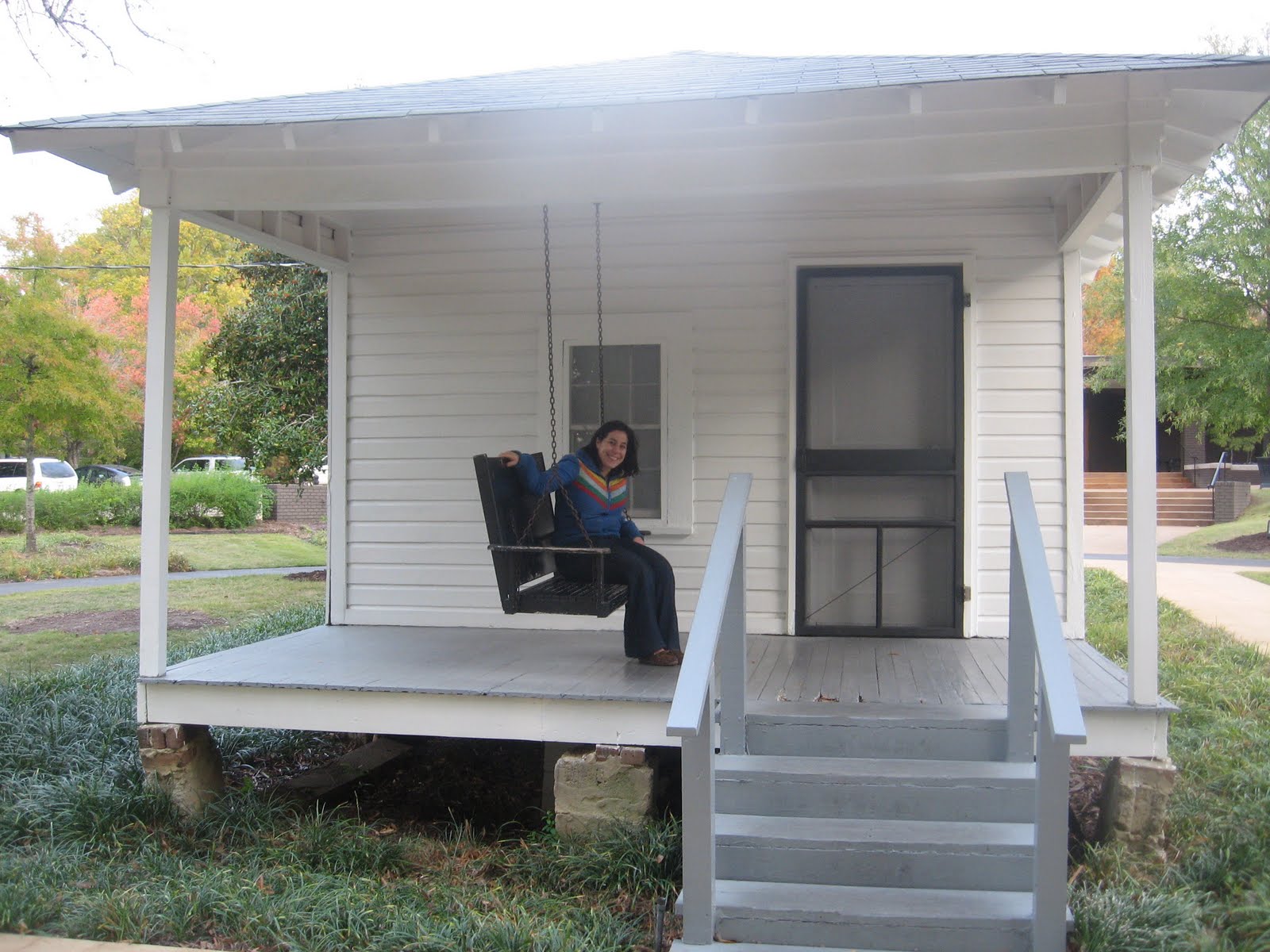
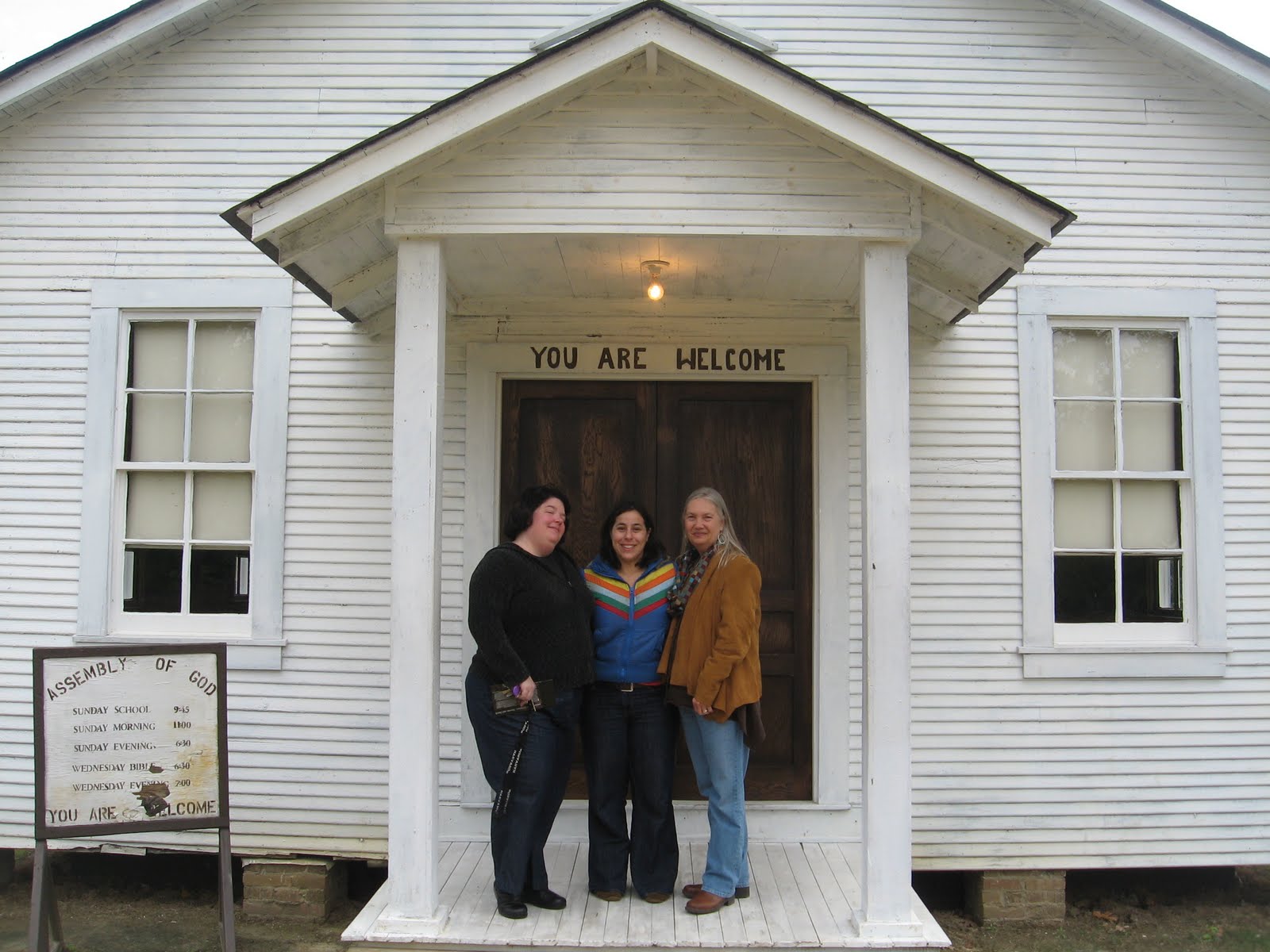
We headed over to Elvis’ birthplace compound in East Tupelo and met up with Melanie Deas. What a blast! Elvis’ family’s original humble Pentecostal church and 2-room home were on sight, as well as a museum, lovingly curated, often featuring items donated by oldtime Presley family friends, whom Melanie and Pat knew! So I was 3 degrees of separation from Elvis.


Melanie took me to dinner at Vanelli’s, a Greek/Italian restaurant that seemed a local legend in its own right. The owner knew everyone dining and I particularly admired the art on the walls, a hodge podge of southern folk art and Elvis portraits. Did I mention I love southern folk art, AND Elvis? I really loved Tupelo. Pat and Melanie want to show Burning In the Sun again there to give it a chance to be more widely seen by the community, and I have a feeling I’ll be back before too long.

The next day took me to Hapeville, GA, a very small town of 6,000 right on the perimeter of Atlanta. Charlotte Rentz, director of the Hapeville Historical Society, had planned a terrific little reception for the film in the lobby of the Historical Society, which happened to be housed inside an old Train Depot! A ton of history was housed in there, which I regret I didn’t get to investigate more thoroughly. However I did get to meet the mayor of Hapeville, who had stopped by to meet me, even though he wouldn’t be able to stay for the screening due to his 30th high school reunion scheduled for that same night. Apparently lots of local film enthusiasts would also be attending that same event – a shame! Nevertheless, a small but very enthusiastic and supportive crowd gathered at the train depot, many of whom I met. Shlomiel was a 21-year old who rode his bicycle 30 minutes from Atlanta to get there, having seen an ad for the film and wanting to learn everything he could about creating his own sources of renewable energy. I also met Dianise, a woman who worked with the local homeless population who had taken it upon themselves to start constructing solar panels out of scrap pieces they found, wanting a source of free energy to make their lives a little better. These stories blew me away, and I feel really honored to have the film seen by these individuals. A sizable crowd came together and the film was shown in a church sanctuary across the street from the train depot. Even the pastor attended. I really enjoyed this Q&A, which benefitted from the diverse crowd, imploring questions, and the warm energy from the audience. Hapeville was exactly the kind of small, energetic American town that could be really inpsired by the film, and I was very pleased to see how well it resonated with people from this community. Thanks to Charlotte, and also Allie and David from the Hapeville Main Street Association for making the evening such a success, and making me feel so welcome.

The next day I spent on my own in Atlanta, where I had never been before. I started off in the Virginia Highland district, which reminded me of a southern kind of Carroll Gardens, the neighborhood I used to live in Brooklyn. It was a beautful autumn day, and after a couple days of unusually cold weather, I welcomed the warmth of the sun! I moved on to the Sweet Auburn Historic District, home to the King Center, Martin Luther King’s birthhome, gravesite and memorial, the Ebeneezer Baptist Church where both King and his father served as pastors, and other markers of the civil rights movement. Rarely in my life have I been so profoundly touched and moved by a place of historical significance. On what became a cool gray November afternoon, I was surprised to find myself alone, with no one else in sight, at the grave of Martin Luther King Jr. Kind of mind boggling to be alone with Dr. King. Despite the memorial, the reflection pool, and the burning eternal flame nearby, I was struck by the humble brick surroundings of his grave and the general lack of fanfare. Though the humility seemed appropriate to his character, I couldn’t help but feel that he deserved more attention. Needless to say, I got to thinking about the current situation of our country, our leadership, our communities, and our character. Maybe it wasn’t that Dr. King’s gravesite needed more fancy frills, but the essence of who he was and what he stood for needed to be paid more attention, by leaders and individuals alike. He went to jail 14 times as a consequence of his convictions. And I was bowled over to re-learn that the Montgomery Bus Boycott was a success because 50,000 people in a single community stood together for a solid year, unwavering, and were then supported by the judgment of the legal system. For me that is a true lesson in nonviolent solidarity and absolute moral conviction. In the wake of the recent midterm elections, all the name-calling, all the blame-placing, and all the fear-mongering, it seems the country could use a strong dose of MLK’s spirit and conviction, which seem so hard to locate amidst all of the distractions. I highly recommend a visit to all things King if you’re in town.


Note the image of Gandhi up top above the King family.


To wrap up my day in Atlanta, I visited Shlomiel, from the screening the evening prior in Hapeville, at the Soul Vegetarian restaurant on Abernathy Blvd. where he worked. He had a lot more questions about the film and about what his next steps could be, and I was happy to talk with him and find out more about his bold visions and his experiments in creating homemade solar energy devices, like the solar water heater he had concocted out of black-painted aluminum cans! Again, his knowledge, sense of curiosity, and out-of-the box thinking really impressed me. I was so excited and grateful to have connected with him through the screening of the film. He’s going to be a great leader one day, and I’ll say I knew him back when….

Some tidbits and observations: 1) Church. Visiting Martin Luther King Jr.’s church and Elvis’ church (I know, a bizarre duo for comparison), I was struck by the strong, positive role the institution had played in shaping each of their lives. What’s changed about church these days, where it’s clearly become a dividing institution, and no longer one that unites? 2). Southern people are crazy friendly. A waitress in Atlanta shook my hand and introduced herself after taking my lunch order, with no alterior motive whatsoever. A shuttle driver in Memphis hugged me as I deboarded a bus. I know it’s a cliché, but wow! 3) Driving in the car I heard poet Elizabeth Alexander – who was commissioned to write a poem for Barack Obama’s inauguration – speaking on the radio. She mentioned her strong dislike of the Obama-era term ‘post-racial.’ She felt it encouraged a forgetting of history and erasing of individual identity. She instead preferred the term ‘post-racism.’ Words to meditate on….

Tuesday, November 02, 2010

Meet Cambria Matlow


Welcome Cambria Matlow to the Southern Circuit Tour of Independent Filmmakers! Her first screening will be held Thursday, November 4, 2010 at the Tupelo Film Commission. The show starts at 6:30 PM. Don't miss it!

Cambria Matlow has directed several short narrative films. She holds a Certificate in Film Production from Burlington College in Vermont and a B.A. in Hispanic Studies from Columbia University. She has driven across the United States six times, lived in Spain and New Zealand, and traveled abroad extensively, including spending time in Morocco, Singapore, Central America and Eastern Europe. Burning in the Sun is Cambria’s documentary feature directorial debut.