Hi,
I do not have a laptop so blog posts on my tour may be sporadic and will definitely not be coherent on account of exhaustion. Just so you know.
In any case, I arrived in Montgomery, AL yesterday and had a screening of MANHATTAN, KANSAS at the Capri theater last night. The Capri was pretty neat and old and Martin does a pretty golden job of running it. I had ten very kind viewers come to the show. Two of them bought copies of the film. I asked everyone to stand in front of the stage with me for a picture, which they did. It was a pretty good day. I had pizza for dinner, saw Hank Williams grave and then went to my hotel to pass out. Martin gave me a screener of OLD JOY, which I cannot friggin' wait to watch.
9 am the next morning I got into my Pontiac G6 and headed for Jackson, MS, which is where I am right now, at Millsaps College. A very kind Michelle and Holly are taking good care of me. Michelle took me to dinner (Holly had to teach). I had fried pickles, seafood gumbo and crawfish etoufee(sp?). I washed it down with a Bass served in a cold milkshake glass. Neat. I feel very full and sleepy.
Not five minutes ago I introduced the film to a hearty crowd at the Millsaps auditorium; I forgot to thank Millsaps and Southern Circuit and Holly and Michelle. I was nervous. I will remember to thank them during the Q & A; I will also remember to tell the audience DVDs of MHK are on sale on my website: http://lbthunderponyproductions.com/ and that my mom's art -- as featured in the film -- is on sale at http://www.eviewrayartist.com/.
It's strange and wonderful to think that the reason I am in Jackson, MS is because of my movie. I thought a lot about that on the five hour drive from Montgomery. It was just two years ago I was driving across Kansas asking myself why the hell I was driving across Kansas to make a movie about my mom. Well, I can say tonight that I've never been more glad that I did.
I saw these things on my drive today:
a dead chicken (why oh WHY did he cross that road?????)
a dead dog (Beagle)
two dead fawns
several men walking on the shoulder (not together, at different times)
a sign announcing the best fried chicken in Selma, AL can be found at KFC
about a million run down grocery stores
a sign for a catfish farm
a patch of forest that looked to be destroyed by a tornado
a dead cat
a sign that said Trent Lott for Mississippi (which I first read as Trent Lott for President; when I thought it said Trent Lott for President I wondered aloud, "when the hell did that happen?").
Well, that's about it for now. I'm gonna go see if people are laughing and crying at my movie. I hope that they are.
All best,
Tara

Monday, October 30, 2006


Thursday, October 19, 2006
Podcast Interview with Tara Wray - Now Available
 Podcast Interview with Tara Wray - Now Available!
* The interview is listed as Episode III.
* An iPod or mp3 player is not required to listen to the podcasts. Just click on the "Download episode" links and you can listen to them with your media software such as Windows Media PlayerTM or WinAmp.
* If you are registered with iTunes, we encourage you to subscribe to the SAF Podcast and stay connected.
About Tara Wray and her film Manhattan, Kansas:
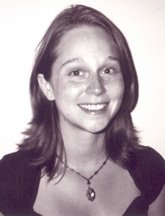 When she was nineteen years old, director Tara Wray fled her childhood home of Manhattan, Kansas after her mother, in a mentally unstable state, threatened to kill her. “My mother was my entire life,” she says, “But, we were always running from her demons, both real and imagined.” Her mother’s undiagnosed emotional and mental state terrorized Wray for years. “One minute she was Mom—funny, tiny, strong, a pleasure to be around. Mom,” recalls Wray, “Then she was Not-Mom—scary, dark, shrunken, yet huge. I spent my whole life trying to anticipate which one was present, which one might show up next. It made me a pretty tightly-wound kid.” Following five years of estrangement, Wray knew it was time to go back – with her camera.
For more information on Manhattan, Kansas, filmmaker Tara Wray, and her touring schedule for October 29 - November 6, visit the Southern Circuit website.
Saturday, October 07, 2006
Better Dead than Coed
BETTER DEAD THAN COED
Slogan on tee shirt worn by a Randolph-Macon student
Slogan on tee shirt worn by a Randolph-Macon student
I arrived in a midst of a war at Randolph-Macon Women’s College!
The Board of Trustees just voted to end 115 years of single sex education and, for financial reasons, admit men. The student and alumnae protest has been wide and swift---occupation of the administration building, silent protests, a hunger strike and a flurry of articles and letters to the campus newspaper “The Sundial”. There is a definite culture that women’s colleges have nurtured, a culture that many fear will end when men are admitted. National studies have shown that women perform better, have more rewarding, career-building experiences and attain higher career goals after attending women’s colleges. Both young men and young women tend to give more negative non-verbal feedback to women practicing assertive leadership behavior in co-ed settings compared to men demonstrating the exact same behavior.
Alumnae describe their experience at Randolph-Macon as “the life-transforming experience that I, like countless other women, [have] had.”
And, “We love the men in our lives but this bonding with our sisters, the love and togetherness which, after four years matriculation here, gives us the unique world view to call these women from all over the world ‘our sisters’, is indeed a special opportunity and experience.”
Being the youngest of 4 sisters, all of who went to women’s colleges, I understand this culture very well. I was glad that in the “State of Fear” the real heroes in the film are women, the human rights activists---embodied in the character of Sofía Macher---who opposed violence in any form either by Shining Path or the Peruvian state. Beatriz Alba Hart, the Lima lawyer who began her political career as a Fujimorista Congresswoman but had an epiphany during the Truth Commission hearings and became a human rights proponent. These women in the film gave the Randolph-Macon students and me a point of connection to talk about during the Q&A after the film. I never really set out to make a film about women. I just find them to be just as interesting as men.
After the screening I realized that there’s a reason the Randolph-Macon Women’s College sports teams call themselves THE WILDCATS. It’s going to take some special men to be the first to matriculate here.
Tuesday, October 03, 2006
Animal Nature, Human Nature
“Human beings have two parts, animal nature and human nature.
The animal part is when people lose their control as humans, their control of reason.”
Ramiro Niño de Guzmán, schoolteacher in “State of Fear”
The animal part is when people lose their control as humans, their control of reason.”
Ramiro Niño de Guzmán, schoolteacher in “State of Fear”
Perhaps the best question I’ve ever been asked about “State of Fear” came from a Millsaps College (Jackson, Mississippi) student at the screening. She wondered whether I agreed with what Ramiro Niño de Guzmán, the Peruvian schoolteacher said referring to making sense of the violence that consumed members of his family during Peru’s 20-year war on terror.
Of course I agree with it because I put it in the film. But beyond that, I think it is one of the most sublime statements made in the film by someone who has thought about the essence of our human nature. Which is that we all struggle with overcoming the animal nature that exists within us. The audience at Millsaps College discussed the persistence of the death penalty in the United States, quite marked in the south where 11 of the 14 death row inmates reside who are scheduled to begin the torturous countdown to their demise via lethal injection before the new year. When someone has committed an egregious crime against a loved one, our animal nature hungers for revenge---for the perpetrator’s death. Our human nature should long for justice. By not murdering the murderer, we rise above our animal nature and exert the civilizing part of our human nature. It is the irrational, the animal nature that was responsible for systematic killing in Peru, for the death of many civilians in Iraq, and for genocide in Darfur and Guatemala. The Millsaps student’s question made me think about why in “State of Fear” it was so important to cast a light on the reasoning power of human nature by featuring the human rights advocates who effectively ended the war and reinstated the Peruvian democracy.
And here’s a big shout-out to Holly Sypniewski and Michelle Acuff, both vibrant professors at Millsaps College. Fun too. They worked hard to get students from many disciplines to come to “State of Fear”, and brought out members of the community too. You can tell that they are the kind of teachers that are seriously committed to engaging their students in new and different ideas---the kind of teachers you remember long after college.
Monday, October 02, 2006
Local Heroes
LOCAL HEROES
The next time you’re in Montgomery, Alabama you gotta go down to the art deco Capri Theater in the Cloverdale Historic District, and you gotta meet Martin McCaffery who’s been the director of this non-profit art house since 1983. Martin’s a former union projectionist who said he came down to Montgomery and started work at the Capri at “50% of my former salary, for twice as much work”. The night I was there, he seemed to know every single customer.
Martin is a champion of free speech, not only by making the Capri into an outpost of interesting foreign and independent films and documentaries but also by flying in the face of the Alabama establishment and showing films like “The Last Temptation of Christ”. Conservative Christians throughout the country protested the film and Martin created a furor. He also served as the spokesman for the Alabama ACLU for many years so he was good at defending civil liberties, including free speech.
"We were condemned by the governor, the mayor and the City Council, and thousands of people signed petitions seeking to stop us from showing [“The Last Temptation”]". Martin explained. The controversy caused people from all over the South to flock to the Capri to see the film and the theater has its best two weeks attendance record ever.
Martin’s other passion is taking pictures of old theaters around the southeast, most of which are closed. You can see these amazing palaces on his website -http://martinmc.home.mindspring.com/.
People like Martin McCaffrey are the lifeblood of independent filmmakers, like me. I think of him as a national treasure. One of the great percs of being a filmmaker on the Southern Circuit is sharing a pizza and beer with someone like Martin and seeing how just one person can make such a huge difference in the quality of life of our communities.
The next time you’re in Montgomery, Alabama you gotta go down to the art deco Capri Theater in the Cloverdale Historic District, and you gotta meet Martin McCaffery who’s been the director of this non-profit art house since 1983. Martin’s a former union projectionist who said he came down to Montgomery and started work at the Capri at “50% of my former salary, for twice as much work”. The night I was there, he seemed to know every single customer.
Martin is a champion of free speech, not only by making the Capri into an outpost of interesting foreign and independent films and documentaries but also by flying in the face of the Alabama establishment and showing films like “The Last Temptation of Christ”. Conservative Christians throughout the country protested the film and Martin created a furor. He also served as the spokesman for the Alabama ACLU for many years so he was good at defending civil liberties, including free speech.
"We were condemned by the governor, the mayor and the City Council, and thousands of people signed petitions seeking to stop us from showing [“The Last Temptation”]". Martin explained. The controversy caused people from all over the South to flock to the Capri to see the film and the theater has its best two weeks attendance record ever.
Martin’s other passion is taking pictures of old theaters around the southeast, most of which are closed. You can see these amazing palaces on his website -http://martinmc.home.mindspring.com/.
People like Martin McCaffrey are the lifeblood of independent filmmakers, like me. I think of him as a national treasure. One of the great percs of being a filmmaker on the Southern Circuit is sharing a pizza and beer with someone like Martin and seeing how just one person can make such a huge difference in the quality of life of our communities.
To Kill a Mockingbird
The first film I ever saw was To Kill A Mockingbird. I was the same age as the young girl Scout, the narrator of the story, and the film made a profound impression. To Kill A Mockingbird is still one of the iconic American stories of the struggle for racial justice and the quest for human rights in a small southern town. And though To Kill A Mockingbird takes place during the Great Depression, the film was released in 1962 as the Civil Rights Movement was in full swing. It’s a great film that fueled people’s desire to never return to the days of segregation and subjugation, and it’s a very human story.
As I head down to Montgomery, Alabama for the first night of the Southern Circuit Arts Tour where I’ll show State of Fear: The Truth About Terrorism in 8 cities over 10 days , I look back at my life as a filmmaker and see that many decisions I’ve made about stories that have captured my imagination or characters who’ve appeared in my films, may have been influenced by To Kill A Mockingbird---from my first film Resurgence about worker’s rights and the Ku Klux Klan, filmed in North Carolina and Mississippi to Presumed Guilty where one of the lawyer characters was actually nicknamed “Atticus Finch” for his calm obsession with truth and justice.
What if Harper Lee, the author of To Kill A Mockingbird, were to come and be in the audience tonight at the Capri Theater in Montgomery? She only lives a 2 hour drive away in Monroeville, but she’s a famous recluse, so I’ll just have to imagine that she’s there in spirit.
As I head down to Montgomery, Alabama for the first night of the Southern Circuit Arts Tour where I’ll show State of Fear: The Truth About Terrorism in 8 cities over 10 days , I look back at my life as a filmmaker and see that many decisions I’ve made about stories that have captured my imagination or characters who’ve appeared in my films, may have been influenced by To Kill A Mockingbird---from my first film Resurgence about worker’s rights and the Ku Klux Klan, filmed in North Carolina and Mississippi to Presumed Guilty where one of the lawyer characters was actually nicknamed “Atticus Finch” for his calm obsession with truth and justice.
What if Harper Lee, the author of To Kill A Mockingbird, were to come and be in the audience tonight at the Capri Theater in Montgomery? She only lives a 2 hour drive away in Monroeville, but she’s a famous recluse, so I’ll just have to imagine that she’s there in spirit.
Subscribe to:
Posts (Atom)